Why Finance Should Guide Strategy, Not Just Reporting
Reporting tells you what happened. Strategy finance tells you what to do next. Here is why UAE leadership teams should put finance at the centre of pricing, hiring, market entry, and capital decisions — not only month-end close.
Key takeaways
- Reporting finance looks backward — compliance, tax filing, historical P&L; strategic finance looks forward — scenarios, trade-offs, capital allocation, and risk.
- When finance only reports, leadership defaults to gut feel for pricing, hiring, and expansion — the expensive mistakes show up later in cash and margin.
- Strategic finance requires integrated numbers: P&L, balance sheet, and cash linked in models leadership actually uses in meetings.
- UAE context adds tax, VAT, banking, and investor scrutiny — finance must translate regulation into decision constraints, not surprise invoices.
- You do not need a full-time CFO to think strategically — you need ownership, monthly review, and finance at the table before commitments, not after.
In many UAE SMEs, finance is treated as the team that closes the books, files VAT, and answers the auditor — important, but backward-facing. Strategy lives in sales, product, and the founder’s intuition. That split works until growth makes intuition expensive: a hire that compresses runway, a market entry that ignores working capital, a pricing change that destroys margin while revenue rises, a tax position that drains cash nobody modelled. At that point, “we’ll fix finance later” becomes the reason why businesses fail during growth phases.
Finance should guide strategy — not replace vision, but shape it with cash, margin, risk, and capital trade-offs visible before commitments harden. This article explains the shift from reporting-only finance to decision finance, what it looks like in practice for UAE leadership teams, and how to build the capability without waiting for a full-time CFO.
Reporting vs strategy — two jobs, one function
Reporting finance delivers:
- Monthly and annual accounts.
- VAT and corporate tax filings.
- Audit support and compliance evidence.
- Historical variance descriptions.
Strategic finance delivers:
- Forward models — budget, forecast, scenarios.
- Decision memos — hire vs outsource, price increase, pause marketing, raise debt or equity.
- Capital allocation — which product, market, or channel earns the next dirham.
- Risk translation — tax, covenant, liquidity, and concentration limits in plain language.
Reporting without strategy is autopsy. Strategy without reporting is guesswork. You need both on the same numbers.
Why accounting is business intelligence for UAE businesses is the mindset — intelligence implies action.
Why every business needs CFO thinking for smarter growth argues ownership, not headcount — someone must hold the strategic finance role even part-time.
Why reporting-only finance fails leadership
Decisions happen without a shared factual base
Sales wants discounting to hit quota. Operations wants headcount for delivery. Marketing wants campaign spend. Without finance at the table, each function optimises locally — globally, margin and cash lose.
Strategic finance answers: If we approve this, what happens to gross margin, runway, and tax cash in ninety days?
Growth magnifies unmodelled trade-offs
Why cash flow matters more than growth claims in UAE business — growth consumes working capital. Reporting finance tells you cash dropped last month. Strategic finance models AR and inventory before you double purchase orders.
Investors and banks expect forward integration
What investors check before funding a business and how to build an investor-ready financial story in the UAE require three-way models — P&L, balance sheet, cash — that reconcile and forecast. Historical packs alone signal immaturity.
Tax and compliance become surprises instead of constraints
Corporate tax in UAE mistakes businesses must avoid in 2026 often start when tax is “accountant’s problem” until cash leaves the account. Strategic finance runs tax cash alongside opex — see how to plan taxes before year-end as an annual peak of a year-round habit.
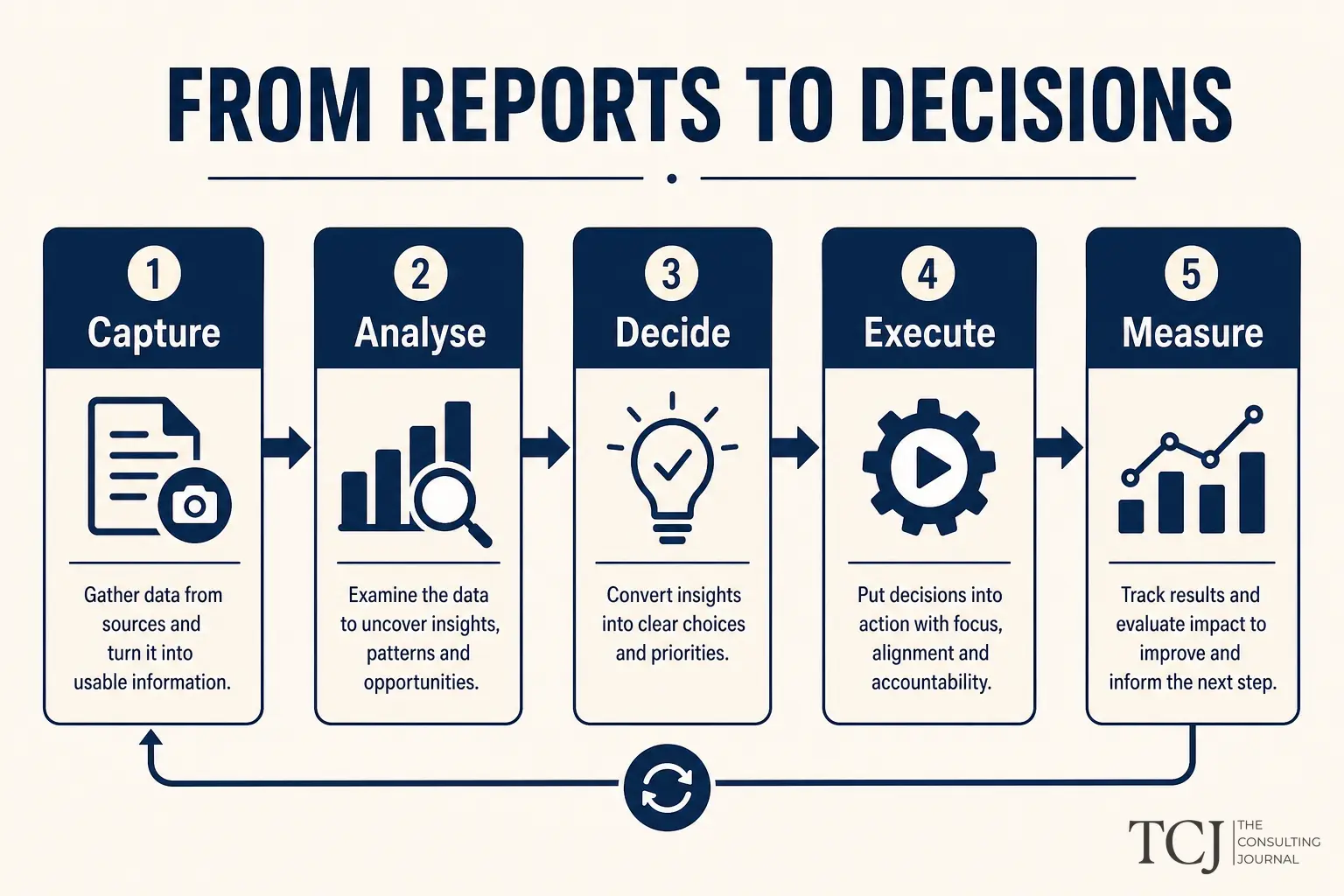
What strategic finance looks like in practice
Pricing and product mix
Finance partners with sales and product on:
- Contribution margin by SKU or service line — how to read a profit and loss statement.
- Discount approval thresholds tied to margin floors.
- Kill or fix products below contribution hurdle.
Why revenue alone does not impress investors — strategic finance prevents revenue that destroys value.
Hiring and organisation design
Before offers:
- Runway impact and breakeven on new roles.
- Compare hire vs contractor vs outsource — outsourced CFO services in the UAE as a model for flexible capacity.
- Headcount KPI in how to create financial KPIs for your company.
Market entry and expansion
Before new geography or channel:
- Startup cost and payback period.
- Working capital pattern — how to read a balance sheet like a business owner.
- VAT and entity implications — VAT registration in the UAE, corporate tax registration next steps.
Marketing and growth spend
Link spend to forecast drivers — how to build a practical business budget. Strategic finance rejects “brand awareness” without measurable funnel or revenue bridge when cash is tight.
Capital structure — debt, equity, retained earnings
Model scenarios before signing:
- Covenant headroom and interest coverage.
- Dilution vs runway extension for equity.
- Dividend or distribution impact on tax and cash.
Debt vs equity framing starts with integrated models, not deck rhetoric.
The operating rhythm of strategic finance
| Cadence | Output | |---------|--------| | Weekly | Cash forecast update; flash revenue/margin if high velocity | | Monthly | Closed books, KPI pack, variance narrative, decisions logged — monthly financial reports | | Quarterly | Budget refresh, scenario update (base/downside), tax estimate | | Ad hoc | Decision memos before major contracts, hires, capex |
Meetings must end with actions, not only observation — the test of strategic finance.
Build the capability without over-hiring
Stage-appropriate models:
Founder-led (early): Cloud ledger, monthly close, simple budget, cash forecast, KPI sheet — build financial systems before scaling.
Bookkeeper + periodic advisor: Daily coding outsourced; accountant quarterly; founder owns strategy inputs — how to choose accounting software for your business.
Fractional CFO / finance lead: Integrated models, board packs, fundraise support, tax planning integration — outsourced CFO services.
Full finance team: When transaction volume, entities, and judgement calls exceed fractional capacity.
Why small businesses need systems early — systems enable strategic finance; chaos forces reporting firefighting only.
Tools — models beat slides
Minimum stack:
- Ledger as source of truth — keeping UAE accounting records ready for tax filing and audit.
- Budget and forecast model linked to P&L and cash — how to read a cash flow statement.
- KPI dashboard — how to create financial KPIs for your company.
AI in accounting for UAE businesses speeds data prep; strategic choices remain human. The future of finance is advisory, automation, and control describes finance leaders spending more time on scenarios and less on manual reconciliation — when systems are clean.
Culture — invite finance early
Fix the anti-patterns:
- “Finance slows us down” — ad-hoc speed creates expensive rework.
- Decisions made in Slack, recorded never — finance hears at month-end.
- Two sets of numbers — deck vs ledger; kills fundraising per investor pitch deck mistakes founders make.
- Tax as surprise — tax planning vs tax avoidance requires forward modelling.
Invite finance to pricing, hiring, and campaign approvals before commitment — not for veto by default, but for informed trade-offs.
Strategic finance and valuation
increase business valuation strategies work when finance proves sustained margin, cash conversion, and disciplined capital allocation — not when valuation is a spreadsheet exercise before sale.
Strategic finance documents the story investors underwrite: reproducible metrics, clear bridges, honest risks.
UAE regulatory context as strategic input
Finance should guide strategy on:
- Small business relief eligibility — small business relief UAE corporate tax affects entity and revenue planning.
- Related-party structures — substance before aggressive splitting.
- VAT recovery and cash — registration timing and compliance — VAT registration when to act.
Regulation is not only compliance cost — it is boundary conditions for growth choices.
Decision memo template — finance at the table
Before major spend, hire, or contract, one-page memo:
- Decision requested — approve / defer / reject.
- Financial impact — P&L, cash, balance sheet over 3/6/12 months.
- Risks — tax, covenant, concentration, execution.
- Alternatives — including do nothing.
- Recommendation — with numbers, not adjectives.
Culture shift: no memo, no approval above threshold. Founders can still move fast — memos can be short — but the habit prevents why businesses fail during growth phases from informal commitments.
Building strategic finance in ninety days
Days 1–30: Name finance owner; monthly close date; budget v1; cash forecast; KPI shortlist per how to create financial KPIs for your company.
Days 31–60: First decision memos on live choices; integrate tax estimate from how to plan taxes before year-end into forward view.
Days 61–90: Board or leadership pack standardised; scenario model for next two hires or major campaign; software and automation review per how to choose accounting software for your business and the future of finance is advisory, automation, and control.
Pricing strategy sessions — finance as co-owner
Pricing is not only marketing. Finance should attend pricing reviews with:
- Contribution margin by SKU or tier.
- Discount sensitivity — what 5% off does to breakeven volume.
- Payment terms impact on DSO and cash — cheaper price with 90-day terms may be worse than fair price with 30 days.
How to read a profit and loss statement supplies historical margin; strategic finance supplies forward scenarios. Without finance, pricing meetings optimise revenue line while destroying cash — the pattern why cash flow matters more than growth claims in UAE business describes.
M&A, partnerships, and inorganic growth
Even SMEs evaluate partnerships, acquisitions, or asset purchases. Strategic finance models:
- Purchase price vs synergies — with integration cost realistic, not zero.
- Balance sheet impact — goodwill, debt, working capital true-up mechanisms.
- Tax structure — asset vs share deal implications with qualified advisers per tax planning vs tax avoidance for UAE business owners.
increase business valuation strategies cut both ways — you are sometimes the buyer assessing target quality with the same skepticism investors apply to you.
Board and investor relations — finance as translator
When boards or investors meet, finance translates operations into numbers and numbers into implications. Prepare:
- Variance narrative tied to decisions already taken and pending.
- Cash runway under base and stress — from how to read a cash flow statement.
- KPI red list with remediation owners.
Monthly financial reports every founder should review in the UAE is the rehearsal for those conversations — if internal packs are weak, external packs will embarrass.
Anti-patterns in strategic finance culture
- Spreadsheet strategy — models disconnected from ledger.
- Finance absent from pricing and hiring — invited only for year-end.
- Metric tourism — copying KPIs from unrelated businesses.
- Compliance-only accountant relationship — no forward dialogue.
- Ignoring balance sheet — how to read a balance sheet like a business owner neglected until debt or inventory crisis.
Training the organisation — literacy at scale
As headcount grows, not everyone reads cash flow statements — but managers should understand how their decisions affect cash. Run short quarterly finance literacy sessions: what DSO means for sales terms, why inventory builds consume cash, how VAT payment months differ from P&L tax lines. Literacy reduces accidental harm.
Founders who skip training recreate information asymmetry — ops optimises locally, finance fires warnings late. Strategic finance scales when non-finance leaders know which levers move cash and margin.
Connect training content to live company numbers anonymised where needed — abstract accounting lectures stick less than “here is our actual AR bridge last month.”
Strategic finance also means knowing when to stop — not every opportunity deserves a model. Finance should flag low-materiality decisions quickly so leadership bandwidth stays on hires, pricing, and capital that move runway materially. That prioritisation is part of advisory value, not only spreadsheet depth.
The return on strategic finance is measured in avoided mistakes — the hire not made, the discount not granted, the market not entered — as much as in opportunities captured. Founders who embed finance in strategy meetings buy optionality cheaply compared with restructuring under duress later.
Start with one decision this month where finance presents two scenarios before approval — pricing, hire, or campaign — and measure whether the conversation changes. That single experiment teaches more than another static board pack.
Over twelve months, the goal is simple: no major commitment without a number attached. When that standard holds, finance has graduated from reporting function to strategic partner — without requiring a large team or expensive ERP.
The bottom line
Finance should guide strategy — pricing, hiring, markets, spend, and capital — with forward models built on trustworthy reporting. Reporting-only finance leaves leadership blind to cash and margin until crises arrive. Strategic finance puts integrated numbers in decision meetings before commitments harden.
The shift is cultural as much as technical: invite finance early, write decision memos, reconcile deck metrics to ledger monthly, and treat tax and cash as strategic constraints — not back-office surprises. Why every business needs CFO thinking for smarter growth describes ownership; this article describes how that ownership changes outcomes when embedded in strategy meetings rather than confined to month-end close.
You do not need a large team to start. You need ownership, monthly discipline, KPIs with actions, and finance invited early.
For help moving from reporting to decision finance in your entity, book a free consultation. Browse the Finance desk for reporting, tax, and systems depth.
This article is general information for UAE-based businesses and is not legal, tax, or financial advice. Confirm your specific obligations with a qualified adviser.
Questions and answers
What is the difference between reporting and strategic finance?
Reporting finance produces accurate historical statements, filings, and compliance outputs — essential but backward-looking. Strategic finance uses those numbers plus forecasts to guide pricing, hiring, market entry, product mix, and capital structure. Both require clean data; only the second changes future outcomes deliberately.
When should a UAE SME invest in strategic finance capability?
When decisions have multi-month cash impact — hiring plans, new product lines, second location, bank facilities, or fundraising within twelve months. If leadership debates spend without current numbers, you already need strategic finance, even if delivered by a founder two days a month plus quarterly accountant review.
Can my accountant provide strategic finance?
Many accountants excel at compliance and review; some offer advisory and CFO services. Clarify scope explicitly — tax filing is not capital allocation coaching. Outsourced CFO services in the UAE bridge bookkeeping and board-level finance when internal bandwidth is thin.
What meetings should include strategic finance?
At minimum: monthly leadership review (P&L, cash, KPIs, variance actions), quarterly budget refresh, and ad-hoc decision sessions before major hires, campaigns, capex, or contracts. Finance should present options with numbers — not only report results after choices are made.
How does strategic finance connect to tax and compliance?
Tax and VAT are constraints on cash and structure — not separate silos. Strategic finance models corporate tax cash impact, relief eligibility, and related-party effects before you expand entities or shift profit. How to plan taxes before year-end is one input; strategy finance runs that logic forward all year.
More in Finance
View all Finance →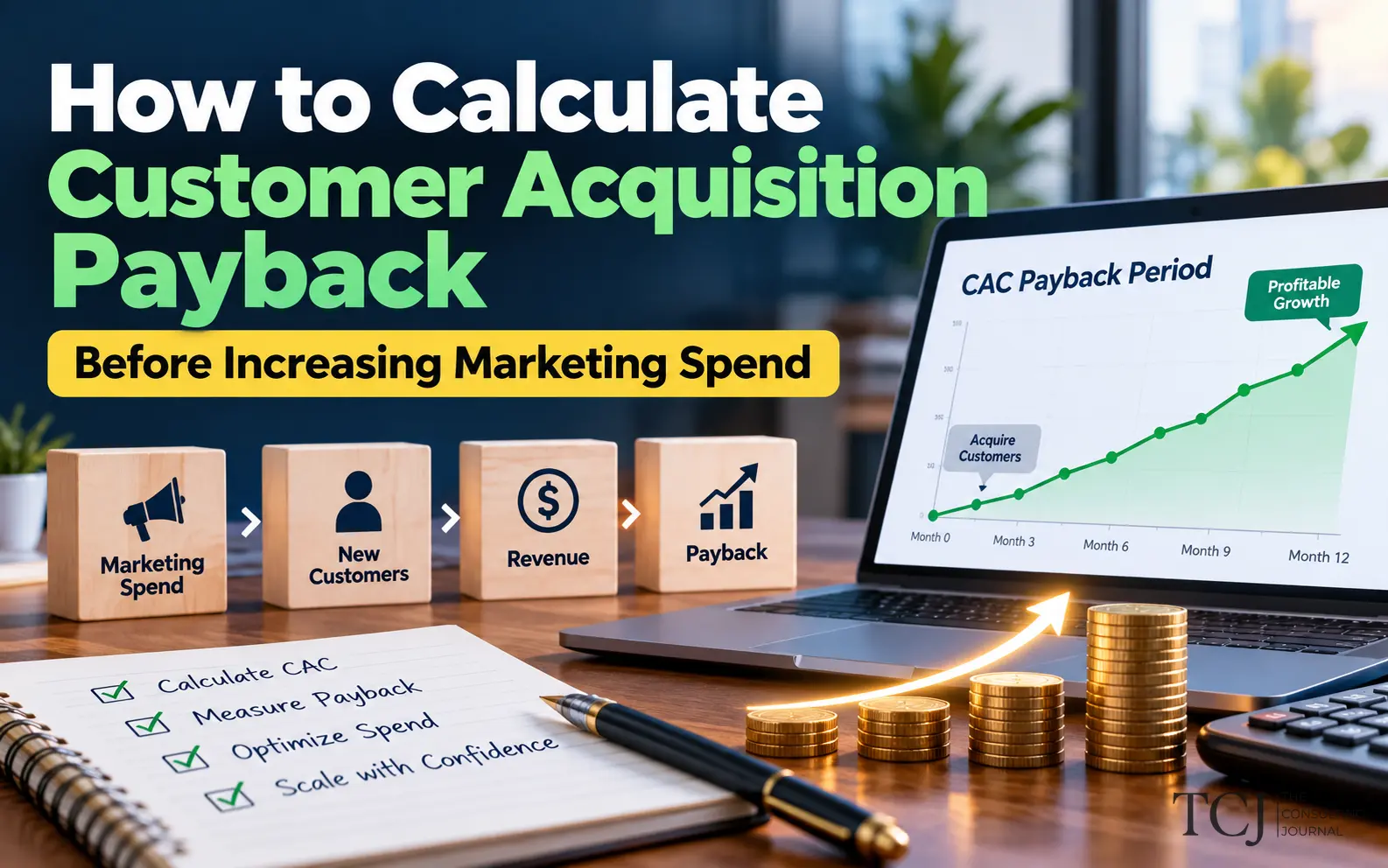
Customer Acquisition Payback: How to Calculate It Before Increasing Marketing Spend
Learn how to calculate customer acquisition payback, evaluate CAC efficiency, and assess whether increasing marketing spending makes financial sense. Includes practical formulas, worked examples, cash flow considerations, and a scaling checklist.
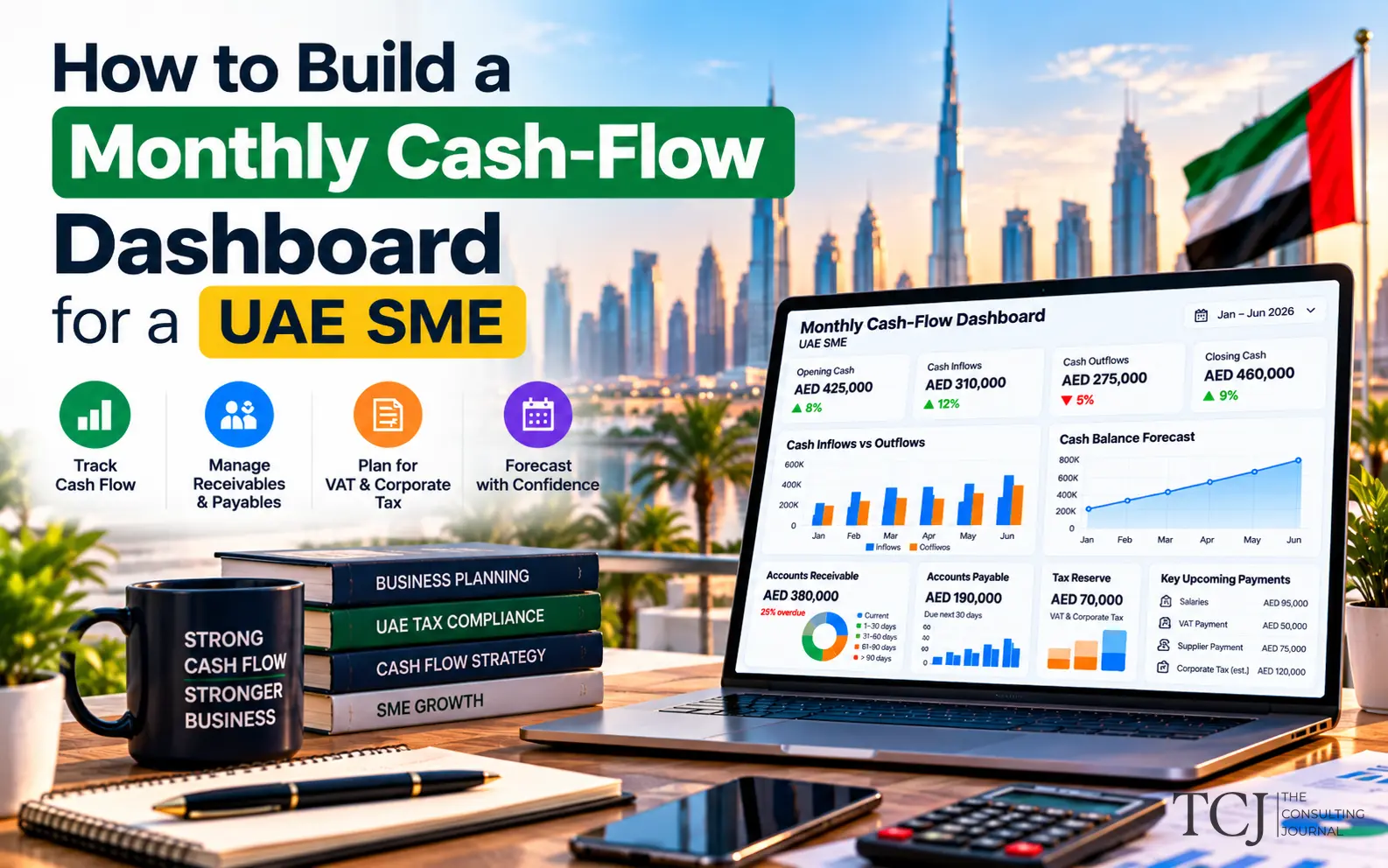
How to Build a Monthly Cash-Flow Dashboard for a UAE SME
A practical guide for UAE SME owners and finance teams on building a monthly cash-flow dashboard that tracks liquidity, collections, payments, tax obligations, forecasts, and working capital.

How UAE Companies Can Build a Faster, More Reliable Month-End Close
A practical UAE finance guide to shortening the month-end close through better reconciliations, cut-off controls, automation, tax readiness, data quality, and clear accountability.